
I’ll be honest, before this internship, “seva” was a word I associated mostly with temple volunteers handing out prasad or NGO pamphlets with stock photos of smiling children.
It felt like a concept that existed at a comfortable distance from real life. Something people did on weekends. Something that looked good on a CV.
I don’t think I fully believed that was all it was, but I hadn’t been pushed to think harder about it either. Three weeks at Youth For Seva changed that.
It started small, as most honest lessons do. My first assignment was a survey at a BDA park in Ullal Kengeri that turned out to be completely abandoned one.
No functioning facilities, no regular visitors. I spent longer than I’d expected just trying to find the local public workers who had any connection to the place.
I remember thinking about how a park is supposed to be useful for public. something built for a community, and how quickly it disappears when nobody feels responsible for it.
That’s when it started to click — seva isn’t just about giving something to someone. It’s about noticing the things that have been quietly given up on, and deciding to care.
Then came Chiguru. Annual flagship event by Youth for seva, essentially a sports and activity day for kids from government schools.
This involves hard work of dedicated volunteers, days of building props, a five-foot Saturn model, a painted ISRO rocket, UFOs made out of paper plates, all of it put together by them. On the day of the event, I was on crowd management duty from 6:30 in the morning.
At one point I helped getting medical aid to an injured student. There was no script for that moment. You just do what needs to be done. And somewhere in that chaos, between the logistics and the painting and the early mornings, I realized that seva at its core is just sustained effort in service.
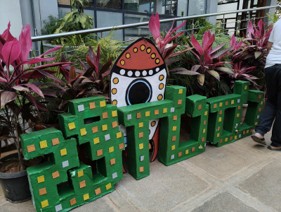
‘Chiguru’ Volunteering
Helping students in Kothanur, involved preparing a Kannada oral presentation for their science projects, drafting a structure, translating it, walking them through the logic took the most of a day and required patience which I didn’t know I had.
But by the end, kids who were barely been able to explain their own projects were doing so with confidence. That felt like something real.
So, what does seva mean to me today?
It means showing up. Not in a motivational-poster kind of way, but literally, being physically present in places and situations where your presence has some use. It also means recognizing that you’re not doing anyone a favor by volunteering. The communities I spent time with weren’t waiting to be saved. They were getting on with their lives. I was the one who needed to learn something.
I started this internship thinking seva was something you gave. I’m finishing it by understanding that seva is mostly something you receive in the form of perspective, discomfort, and the kind of clarity that only comes from getting out of your head and going into the real world.
I study law. I didn’t expect a volunteering internship to remind me why I chose this path. But here we are.
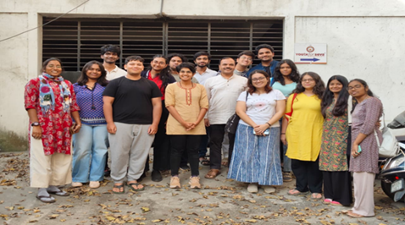
With fellow volunteers and Youth for seva team
Authored by: Vishnu Sharma,
1st Year B.A., LL.B (Hons.) NLSIU
Reading this took me through his journey of volunteering, great read.